When Is a Pulmonary Function Test Required and What Should I Expect?
If you’ve been referred for a breathing test, here’s what it really means
Hearing that you need a pulmonary function test can feel intimidating at first. Many patients immediately wonder if something serious is wrong.
In reality, a pulmonary function test — often called a PFT — is one of the most common and useful tools pulmonologists use to understand how well your lungs are working. It is non-invasive, straightforward, and incredibly informative.
At The Respire Institute, pulmonary function testing is part of our core approach to diagnosing and managing respiratory conditions. Whether you’re experiencing shortness of breath, chronic cough, or managing a known lung disease, this test helps us move from guesswork to clarity.
And clarity is the first step in resetting your respiratory health.
What Is a Pulmonary Function Test?
A pulmonary function test measures how well your lungs:
- Move air in and out
- Exchange oxygen and carbon dioxide
- Respond to medication
- Maintain airflow under stress
The most common component of a PFT is spirometry, which measures how much air you can exhale and how quickly you can do it. More advanced testing may include lung volume measurement or diffusion capacity testing to evaluate how effectively oxygen moves into your bloodstream.
These measurements help us diagnose, monitor, and guide treatment for a wide range of lung conditions.
When Is a Pulmonary Function Test Required?
There are several situations where your provider may recommend pulmonary function testing.
To Evaluate Symptoms
If you are experiencing persistent symptoms such as shortness of breath, wheezing, chest tightness, or chronic cough, a PFT can help determine whether the cause is asthma, COPD, interstitial lung disease, or another pulmonary condition.
Shortness of breath is one of the most common reasons patients are referred for testing, especially when imaging alone does not provide enough answers.
To Diagnose or Monitor Lung Conditions
Pulmonary function testing is commonly used to diagnose and track conditions such as:
- Chronic obstructive pulmonary disease (COPD)
- Asthma
- Pulmonary fibrosis
- Bronchiectasis
- Pulmonary hypertension
If you have already been diagnosed with a lung condition, periodic PFTs help us determine whether your treatment plan is working or needs adjustment.
Before Surgery
Some patients require pulmonary clearance before undergoing major surgery, especially procedures involving the chest or upper abdomen. A pulmonary function test helps assess whether your lungs can safely tolerate anesthesia and recovery.
For Occupational or Environmental Exposure
Individuals with workplace exposure to dust, chemicals, or other airborne irritants may undergo pulmonary function testing to monitor long-term lung health.
In these cases, early detection of reduced lung capacity can prevent further damage.
What Should I Expect During the Test?
One of the most reassuring things about pulmonary function testing is that it is not painful.
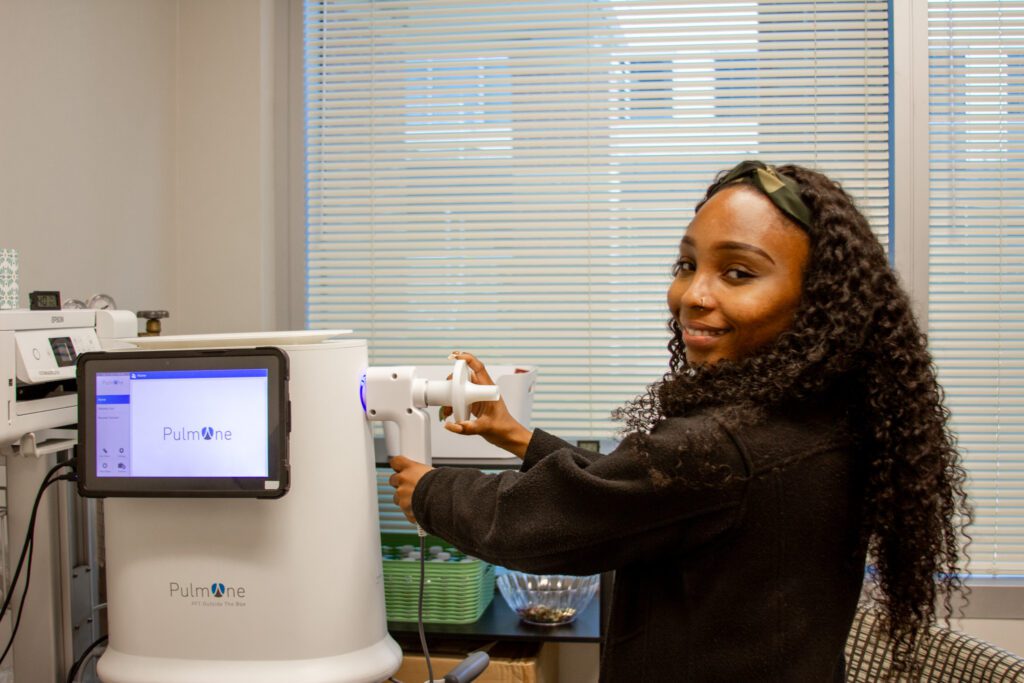
During a typical spirometry test, you will sit upright and breathe into a mouthpiece connected to a machine. You’ll be asked to take a deep breath and then exhale as forcefully and completely as possible. The technician may repeat this several times to ensure accurate results.
Some tests involve breathing in a small amount of medication to see how your lungs respond. This helps determine whether airway obstruction is reversible, which is common in asthma.
The entire appointment usually takes between 30 to 60 minutes.
What Not to Do Before a Pulmonary Function Test
To ensure accurate results, your provider may give you instructions before your appointment.
Typically, patients are advised to:
- Avoid heavy meals right before testing
- Refrain from smoking prior to the test
- Pause certain inhalers or bronchodilators if instructed
- Avoid vigorous exercise immediately beforehand
Following these guidelines helps ensure your test reflects your true baseline lung function.
What Do the Results Mean?
Your results will be compared to predicted values based on age, sex, height, and ethnicity. These reference standards help determine whether your lung function falls within a normal range or shows signs of obstruction or restriction.
Obstructive patterns are often seen in conditions like asthma and COPD, where airflow is limited.
Restrictive patterns may be associated with interstitial lung disease or scarring of lung tissue.
Your pulmonologist will review your results with you in detail and explain what they mean for your care plan.
Why Pulmonary Function Testing Matters
Too often, patients normalize symptoms like breathlessness or chronic cough. They attribute it to aging, weight, or being “out of shape.”
But lung function naturally declines over time, and early detection of abnormal patterns can significantly improve long-term outcomes.
Pulmonary function testing allows us to identify changes early, adjust medications appropriately, and prevent avoidable exacerbations or hospitalizations.
In the spirit of Rest to Reset, this is about understanding your baseline and building forward from there.
When Should You Talk to a Pulmonologist?
If you notice that you’re getting winded more easily than before, coughing for more than eight weeks, or struggling to catch your breath during normal activities, it may be time for evaluation.
A pulmonary function test is often the first step toward answers — and better breathing.
Ready to understand your lung health?
Schedule a pulmonary evaluation at The Respire Institute to determine whether pulmonary function testing is right for you. With the right data, we can create a personalized plan that supports stronger breathing and better quality of life. Get to know our Pulmonary Rehabilitation Center HERE.