From Incidental Finding to Cancer-Free: How Early Action Changed One Patient’s Outcome
Sometimes the most important findings are the ones no one was looking for
A routine calcium score screening is designed to evaluate heart health. For one 68-year-old patient, however, that scan revealed something unexpected: a small lung nodule.
Incidental lung nodules are discovered every day across the United States. Most are not cancerous, and many are classified as low risk according to established guidelines. As a result, many patients enter a period of surveillance, undergoing repeat imaging months later to monitor for changes.
In this case, a different path was taken.
What happened next highlights the importance of combining advanced technology with physician expertise—and how early action can create opportunities for curative treatment.
An Incidental Lung Nodule Raises Questions

The patient had a history of prostate cancer and was referred to Dr. Waheed after a pulmonary nodule was identified during a calcium score CT scan.
Although the nodule technically met criteria that could have supported routine surveillance, its appearance raised concern.
While risk calculators and guidelines are valuable tools, they are only one part of the clinical picture. A patient’s medical history, imaging characteristics, and overall risk profile also matter.
After reviewing the scan and considering the patient’s history, Dr. Waheed recommended moving forward with diagnostic evaluation rather than adopting a watchful waiting approach.
Why Waiting Isn’t Always the Best Option
Many lung nodules are monitored over time through repeat CT scans. This strategy can be appropriate in certain situations.
However, surveillance comes with an important tradeoff: time.
If a nodule proves to be cancerous, months of observation can allow a disease process to continue progressing before treatment begins.
In this patient’s case, the decision was made to pursue a more definitive answer immediately.
Using ION Robotic Bronchoscopy for Earlier Answers
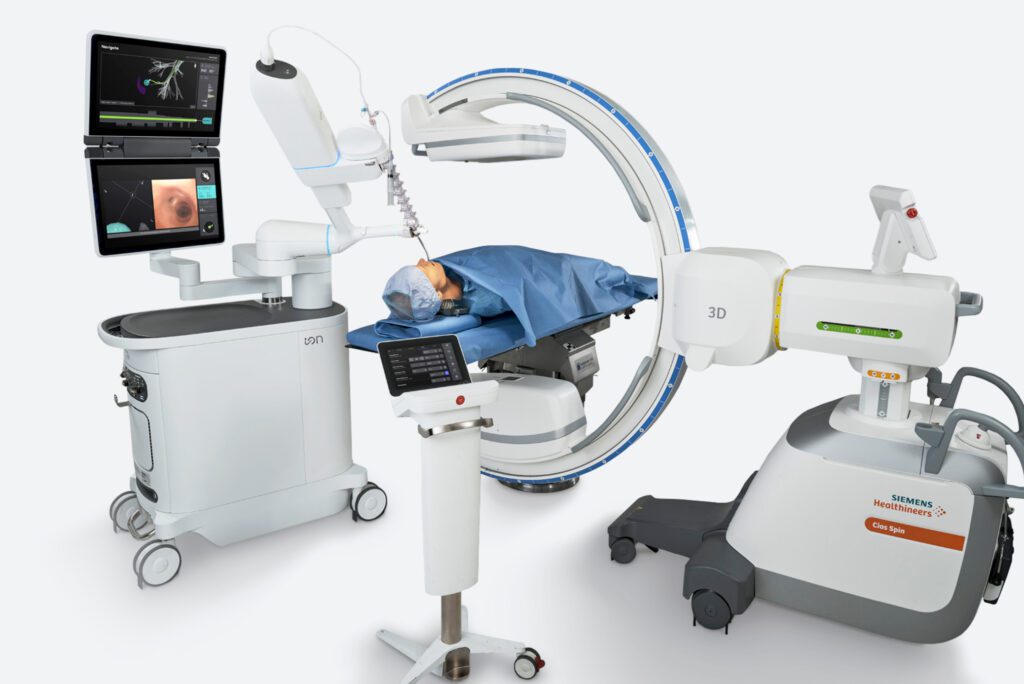
To obtain a diagnosis, the patient underwent an ION robotic bronchoscopy.
This advanced robotic platform allows pulmonologists to navigate deep into the lungs and access small peripheral nodules that can be difficult to reach using traditional techniques.
Unlike older diagnostic approaches that may require multiple procedures, ION robotic bronchoscopy can provide precise tissue sampling while minimizing invasiveness.
The procedure also allows physicians to gather critical information sooner, helping patients move more quickly toward treatment when necessary.
What Is ION Robotic Bronchoscopy?
Diagnosis and Staging in a Single Procedure
One of the most significant advantages of this patient’s care pathway was that diagnosis and staging occurred during the same procedure.
What Is Cancer Staging?
Staging helps physicians determine whether cancer has spread beyond its original location.
For lung cancer, lymph node involvement is one of the most important factors influencing treatment recommendations and long-term outcomes.
Traditionally, staging may require additional procedures after a diagnosis is made.
Why Same-Procedure Staging Matters
During the robotic bronchoscopy, Dr. Waheed performed comprehensive lymph node staging in addition to obtaining tissue from the lung nodule.
This streamlined approach provided answers immediately rather than requiring separate appointments and additional procedures.
The pathology results revealed:
- Adenocarcinoma of the lung
- No evidence of cancer within the lymph nodes
Because staging was completed at the same time as diagnosis, the patient could move directly to the next phase of treatment.
Preserving a Curative Opportunity
The absence of lymph node involvement meant the cancer was identified at Stage I.
This distinction is critically important.
When lung cancer is detected early, patients are more likely to qualify for surgical treatment with curative intent. As cancer advances, treatment options often become more complex and outcomes can become less favorable.
Because the cancer was identified before progression occurred, the patient remained an excellent surgical candidate.
Minimally Invasive Treatment and Recovery
Following diagnosis, the patient was referred to Dr. Sivadasin, cardiothoracic surgeon at Houston Methodist West Hospital.
On December 30, 2025, the patient underwent a minimally invasive robotic wedge resection using the da Vinci Surgical System.
The cancerous tissue was successfully removed.
From incidental discovery to diagnosis, staging, surgery, and recovery, the entire process occurred within approximately one month.
Today, the patient is cancer-free.
What This Case Demonstrates
This story highlights several important advantages of an integrated lung nodule evaluation program.
- Early action allowed diagnosis before progression occurred.
- Concurrent staging eliminated delays between diagnosis and treatment planning.
- Minimally invasive technology helped avoid multiple procedures while preserving surgical candidacy.
Most importantly, early detection created an opportunity for curative treatment.
The Difference Between Watching and Acting
This case illustrates the difference between:
- Watching and acting
- Delayed staging and immediate staging
- Sequential procedures and streamlined care
- Potential progression and preserved surgical candidacy
- Late-stage treatment and early-stage cure
This is what healthcare professionals often refer to as stage shift: identifying disease earlier, when more treatment options are available and outcomes can be significantly improved.
Why Early Evaluation Matters
Not every lung nodule is cancer.
But every lung nodule deserves thoughtful evaluation.
At The Respire Institute, our lung nodule program combines advanced imaging review, physician expertise, ION robotic bronchoscopy, and comprehensive staging techniques to help patients receive answers as quickly and safely as possible.
For some patients, that difference can be life-changing.
Concerned About a Lung Nodule?
If you have been told you have a lung nodule or an abnormal CT scan, our pulmonary specialists can help determine the most appropriate next steps.
Early answers may create opportunities that simply aren’t available later.
Read more.